
The Episcopal Church champions and advocates for humane policy towards migrants because of our belief that every human being is a child of God and must be treated with dignity.
Our ministry with migration, immigration & refugees has deep roots in our faith tradition's commitment to hospitality to the stranger.
“I call upon every member of the Episcopal Diocese of Iowa to pray and to discern how God is calling you to act for God’s Kingdom at this time. Whether it is by risking your physical well-being in solidarity with our immigrant neighbors or by laying down your life in other ways such as prayer and supporting others, your faith impels you to act. Refusing to act in the face of evil supports those powers that we have sworn to resist. The situation we face has moved far beyond partisan politics. Now is the time for all Christians to put our faith into action, to love God and to love our neighbors as ourselves, and to dedicate ourselves to building up God’s Kingdom.”

Take Action
Explore resources on immigration and refugees, and ways that you can help.
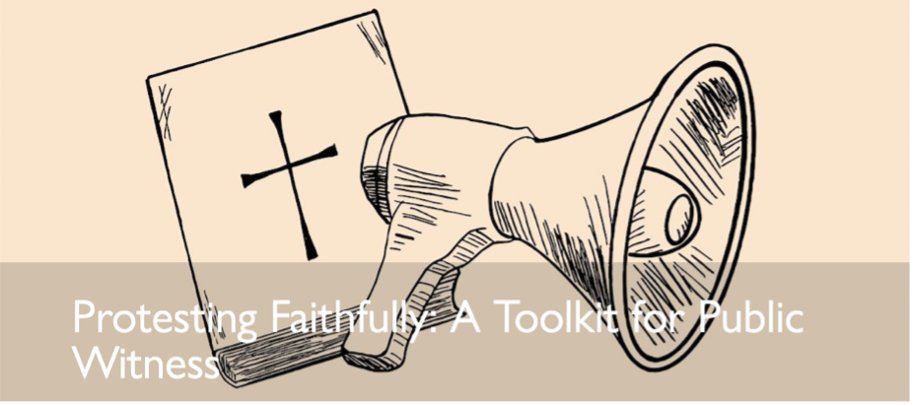
Protesting Faithfully
A toolkit for public witness from The Episcopal Church
“For I was hungry and you gave me food, I was thirsty and you gave me something to drink, I was a stranger and you welcomed me. ”
“When an alien resides with you in your land, you shall not oppress the alien. The alien who resides with you shall be to you as the citizen among you; you shall love the alien as yourself, for you were aliens in the land of Egypt.”
“You shall love your neighbor as yourself.”
Know Your Rights (KYR)
Iowa Migrant Movement for Justice - Know Your Rights Video, English
Iowa Migrant Movement for Justice - Know Your Rights Video, Spanish
Additional KYR Resources:
For red cards in various languages including Dinka, see the “Resources” section below
News
“What happened a week ago in Minnesota, and is happening in communities across the country, runs counter to God’s vision of justice and peace. This crisis is about more than one city or state — it’s about who we are as a nation. The question before us is simple and urgent: Whose dignity matters?
Safety built on fear is an illusion. True safety comes when we replace fear with compassion, violence with justice, and unchecked power with accountability. That’s the vision our faith calls us to live out — and the promise our country is meant to uphold.”
Donate:
Give to Casa Maria (MN) A ministry of the Diocese of Minnesota, Casa Maria is providing much-needed food, supplies, and community, and is helping families locate and access members who have been taken by ICE.
Stand with Minnesota This directory of places to donate to all comes from activists on the ground, plugged into the situation. Everything is vetted, with the exception of individual GoFundMes.
Emergency Migration Ministry of The Episcopal Church Your gift will allow us to rush financial support to dioceses that are loving and caring for immigrants in these difficult times.
“What is crucial at this time in our history is to remember that God is always on the side of the most vulnerable, the most marginalized, and the poorest. When Jesus came to save the world, he did not do so through the means of empire and force, but through the power of God’s love, which is so strong that it even disrupted death through the resurrection. All of us who are followers of Jesus are called to resist the forces of empire wherever we see them, even in our own government. ”

“...the gospel of Jesus Christ calls us to welcome the stranger and to love our neighbors—whoever they may be—as ourselves.
Our call as faithful witnesses to the gospel has not changed with the new presidential administration. We are called to continue the work that we have always been doing here in Iowa: loving our neighbors, feeding the hungry, clothing the naked, welcoming the stranger, standing up for the oppressed and marginalized in our society. As Jesus said in Matthew 25:40, “Truly I tell you, just as you did it to one of the least of these who are members of my family, you did it to me.””


What We Can Do:
There are many different ways we live out our call to be faithful witnesses to the gospel and welcome the stranger. We can do this both as individuals and congregations, at national, state, and local levels.
Look to immigrant-led and immigrant-serving organizations in your area to learn what the needs are in your specific community. Also consider your target audience for collective local actions and be mindful of publicity. For example, some "Know Your Rights" trainings may be more widely publicized if they're tailored to churches or organizations, but may be advertised using only word of mouth if the target audience is predominately the immigrant community; or, it may be advertised only using email/phone and not published on the web at all. So be mindful of safety concerns and work with others to determine what works best in your community.
Each of our contexts is different so there is no "one size fits all" approach, but below are some recommended organizations and resources to help you get plugged-in and learn more.

Prepare
Everyone has rights, regardless of immigration status. It's important for all of us to know our rights and to have plans in place in case of emergencies so we can protect ourselves and members of our communities.
-
Conduct a risk assessment, determine policies, and practice what to do if law enforcement shows up
Designate 1 person who has the authority to make decisions about granting access to law enforcement personnel (such as ICE) to that congregation or diocesan ministry’s building(s)
Train staff and outside groups who use your space on these policies
Have “Know Your Rights” flyers and cards available in convenient locations
Host a “Know Your Rights" session led by an immigration attorney or immigration advocacy group
Share "Know Your Rights" resources with friends and neighbors
Create a Family Preparedness Plan in case of emergency - useful regardless of immigration status, and additional advice is available for immigrant families
-
Welcoming, Protecting, and Preparing: A Congregational Guide from SEIA Synod, ELCA Pastor Bothwell, in consultation with immigration and criminal justice attorneys, IMMJ, AMMPARO materials, IRLC.org
Know Your Rights Video (in English) from IMMJ
Know Your Rights Video (in Spanish) from IMMJ
Know Your Rights Handout from IMMJ
Know Your Rights Red Cards (in many languages)
Family Preparedness Plan from Immigrant Legal Resource Center

Help Change the Narrative
Immigrants are our family, friends, and neighbors. We are called to welcome everyone, regardless of immigration status, and to stand against policies and actions that marginalize, dehumanize, or take away another human's dignity.
-
Hold prayer vigils or consider having the church open for specific hours for people to enter to pray about immigration issues; such vigils have the potential to shift public opinion and serve to provide public witness to what is happening
Host (maybe with other churches in town) a community potluck and roundtable discussions on immigration issues
Continue and look for new ways to promote our message that all are welcome at The Episcopal Church
Incorporate liturgical and small group resources into your services (e.g. prayers of the people, book studies)
-
Prayers of the People for Refugees and Displaced People from Episcopal Migration Ministries
Welcoming the Stranger small group curriculum from World Relief
Book Discussion Guides from Episcopal Migration Ministries

Engage in Public Policy
Get involved at the national and local levels.
"Legislation/public policy is how we distribute access to things like medical care, clean water and air, food, education, justice, and so on…The voice of the church needs to be present for these conversations, representing as best and as faithfully as we can what we think Jesus would have us do."
- Rev. Wendy Abrahamson, diocesan lobbyist
-
Contact our lawmakers (national and state) directly about legislation that would harm our immigrant neighbors
At the state level, comment on legislation, show up at sub-committees, public hearings, and public rallies in support of immigrants
Encourage others to engage in public advocacy
Host a training session on how to engage in Gospel-based public advocacy aimed at showing mercy and compassion
Get involved with our diocesan public policy ministry, "Faith in Action"
-
Call Your Legislators: using the website 5calls.org, you can enter your zip code, choose your topic (i.e. Defund ICE), and it will give you a sample script and your legislator's phone numbers.
Statewide Advocacy Calls are the Third Thursday of every month at 4pm
First Friday presentations are monthly at Noon
Faith in Action: our diocesan advocacy and public policy ministry; you can find resources on this page for how to find and contact your legislators, see what bills we've declared on, the topics we follow, and more.
Weekly updates from The Episcopal Church: every Tuesday at 1 pm EST/Noon CT. Episcopal Migration Ministries and the Office of Government Relations 30-minute updates on U.S. immigration policy and the responses in our churches and communities. Spanish interpretation available.

Connect with Others
Meet and build relationships with your local immigrant-led and immigrant-serving organizations. Connect with other faith groups, non-profits, and others in the community - we're stronger together.
-
Serve as places of welcome and healing, and continue to provide welcoming and safe spaces for support groups
Continue all food based ministries serving all who show up at the door; and if such a program does not exist, consider creating one
Look for new ways to partner with local community groups to minister to affected individuals and families; e.g. conduct coordinated canned goods drives to fill local pantries; serve as a site for support services provided by other community groups
Have a flyer readily available with local non-profits and other agencies involved in providing support services including the contact information for each; this may already exist in some communities, but if it doesn't consider putting one together
Provide other forms of material and pastoral support for those targeted by hate due to immigration status or some other perceived status of difference
Work alongside friends, families and neighbors to ensure the dignity and human rights of all people.
-
A few of the organizations that have additional resources, and work in multiple communities in Iowa

Check out each of these pages for resources on immigration and refugees, and ways that you can help:

IMMJ is a statewide membership-based legal service and advocacy organization driven and led by immigrant and refugee voices and united with allies. They're an affiliate of the Justice for Our Neighbors network and a GILEAD Grant partner organization. They have a ton of helpful resources, legislative updates, community bulletins, and more.
Sign up for their newsletter here
Resources
Resources in Requested Languages:
-
Pocket/Wallet Cards:
Videos:
Flyers/Guides:
KYR Guides from CAIR - as a student, as an employee, with law enforcement/FBI, while traveling; & what to do after a hate crime/incident - Arabic & English here
-
Pocket/Wallet Cards:
Videos:
KYR from Catholic Charities (Archdiocese Dubuque) - Dari, English
Flyers/Guides:
KYR Guides from CAIR - as a student, as an employee, with law enforcement/FBI, while traveling; & what to do after a hate crime/incident - Dari & English here
-
-
-
Pocket/Wallet Cards:
Videos:
KYR from Catholic Charities (Archdiocese Dubuque) - Pashto, English
Flyers/Guides:
KYR Guides - as a student, as an employee, with law enforcement/FBI, while traveling; & what to do after a hate crime/incident - from CAIR - Pashto & English here
-
Pocket/Wallet Cards:
Videos:
KYR from Catholic Charities (Archdiocese Dubuque) - Spanish, English
KYR scenarios & tutorials from We Have Rights - Spanish, English
Safety Planning from USCRI - Spanish
Flyers/Guides:
There are many more resources available in Spanish - check out organizations highlighted elsewhere on this page for more.
-
Pocket/Wallet Cards:
Flyers/Guides:
KYR In an Encounter With ICE - Flyer from Catholic Charities NY - English & Ukrainian
KYR with ICE - Flyer from the Washington Immigrant Solidarity Network - Ukrainian & English (note: phone number on this flyer is for Washington…rest of info is helpful)
Various Flyers & Information from the Ukrainian Immigration Task Force - Ukrainian, English
General
Factsheet: Trump Recission of Sensitive Locations Policy (updated Jan. 2025) from the National Immigration Law Center & Episcopal Migration Ministries
Walking with Immigrants video with the Rt. Rev. Michael Curry
About Sacred Resistance from the Episcopal Diocese of Los Angeles (resources from before 2025)
Liturgical & Small group RESOURCES
Prayers of the People from EMM
Explore the small group curriculum, Discovering and Living God’s Heart for Immigrants: A Guide to Welcoming the Stranger, available from World Relief.
Webinar on Immigration Advocacy for Episcopalians, curriculum for use with webinar (from EPPN, 2017)
FOR THOSE IN NEED
List of Immigration Attorneys, Aborgados de Inmagración in Iowa, from IowaMMJ (updated Jan. 2025)
Creating a family preparedness plan: advice for immigrants from the Immigrant Legal Resource Center
Advice from the Department of Homeland Security on avoiding immigration scams
Informed Immigrant: website with resources for undocumented people & their families (Spanish)
From The Episcopal Church
Immigration Action Toolkit: a lot of resources including what to know, ways to help, know your rights information, advocacy resources, organizations, Episcopal Church policies, and more.
Resources from The Episcopal Church Office of Government Relations
Episcopal Church Immigration and Refugee Resolutions Summary (from September 7, 2022, updated 2024)
Organizations
national
Episcopal Migration Ministries: a ministry of The Episcopal Church and one of nine national refugee resettlement agencies in the U.S.; welcomes refugees, educates communities, and mobilizes congregations to advocate for the protection and rights of all migrants
Resources include Bible Studies, Book Discussions, speakers, liturgical and worship, toolkits, and activities
Interfaith Immigration Coalition
National Immigration Law Center
local
Iowa Migrant Movement for Justice (IowaMMJ): a statewide membership-based legal service and advocacy organization driven and led by immigrant and refugee voices and united with allies; affiliate of the Justice for Our Neighbors network; GILEAD Grant partner organization
Lutheran Services in Iowa’s Immigrant and Refugee Community Services continue to welcome Iowa’s newest neighbors by providing education, family services, and economic development programs to help them get started on their path to citizenship and building a new life in Iowa.
Catholic Charities Dubuque & Des Moines: Catholic Charities works to welcome and integrate immigrants, refugees and asylees, offering critical services to vulnerable populations.
Refugee Alliance of Central Iowa: a voluntary membership network of service providers, government agencies, religious groups, nonprofit organizations, and educational institutions that work together to better serve the needs of the growing refugee population in central Iowa. We provide targeted assistance in the areas of health, housing and transportation, interpretation, education, legal, along with advocacy at federal, state, and local government level.
Prairielands Freedom Fund: Funds raised will be distributed to community members in need of legal bond and representation. Bonding out our neighbors detained by immigration and connecting them with lawyers gives them the best chance at remaining members of our community and helps keep families together. Average bail is $5,000 to $7,000.
Iowa Legal Aid: Provides free civil legal assistance to low-income and vulnerable Iowans, about topics such as housing, income, benefits or safety, how aging is affecting benefits/debts, disaster relief, and more.
*This resource list is made available by the Episcopal Diocese of Iowa for educational purposes only. The opinions, ideas and advice expressed in these documents do not necessarily reflect the policies of the Episcopal Diocese of Iowa, nor should they be used as a substitute for competent legal advice from a licensed professional attorney.