
Lent provides us with the opportunity for self-examination, repentance, prayer, fasting and self-denial; and to read and meditate on God’s holy word
(Book of Common Prayer, p 265)
Featured Lent Offerings:
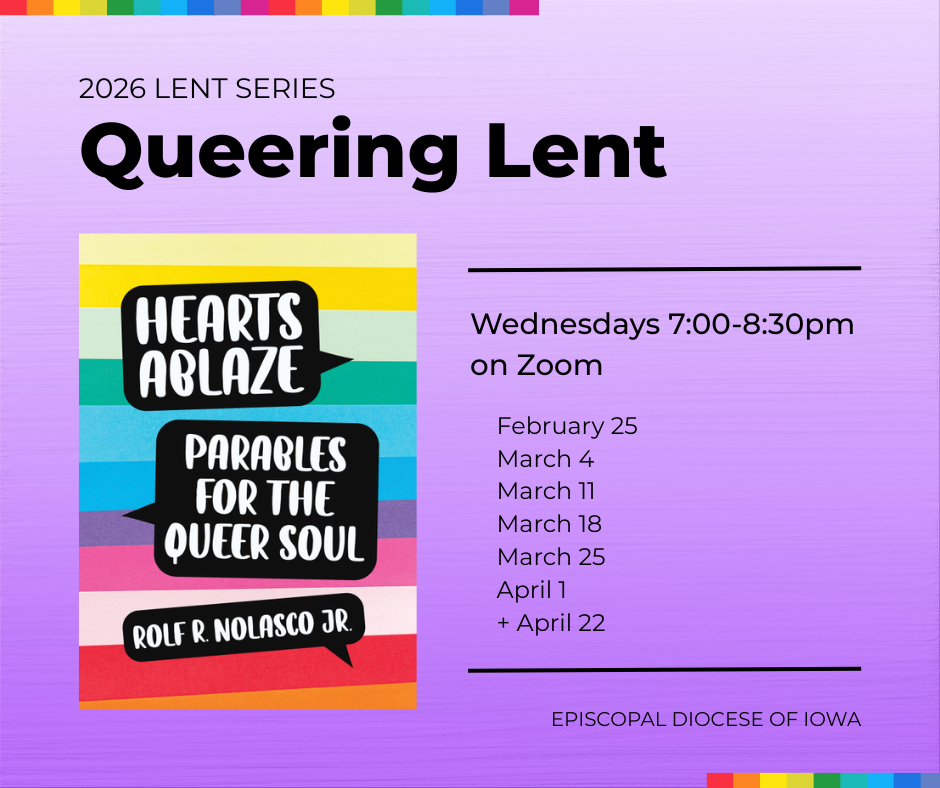
Diocesan Offering
Using the book "Hearts Ablaze: Parables for the Queer Soul" by Dr. Rolf Nolasco Jr., we'll explore how looking at church, the Bible, and ourselves through a queer lens can expand our relationships with God and each other. Wednesdays in Lent on Zoom, all are welcome!
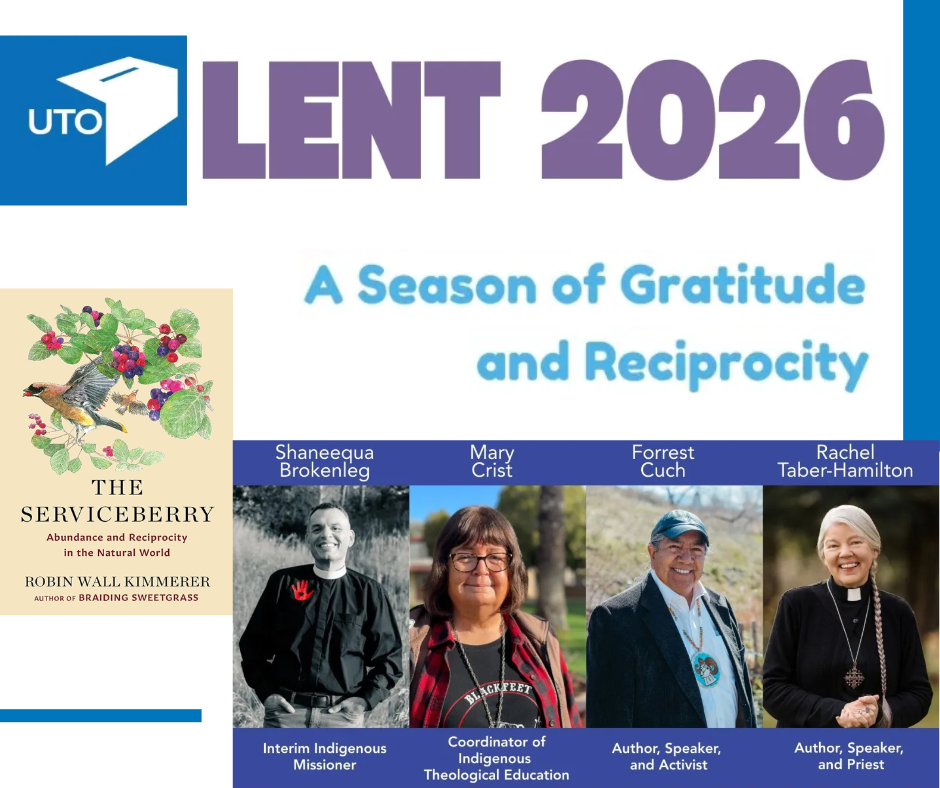
Book Group + Panel Discussion
This Lent’s United Thank Offering materials are inspired by the book “The Serviceberry: Abundance and Reciprocity in the Natural World” by Robin Wall Kimmerer. Participate in their book group, register for the panel discussion featuring Indigenous Episcopal Leaders discussing gratitude and reciprocity, find sample bulletin inserts, and much more.
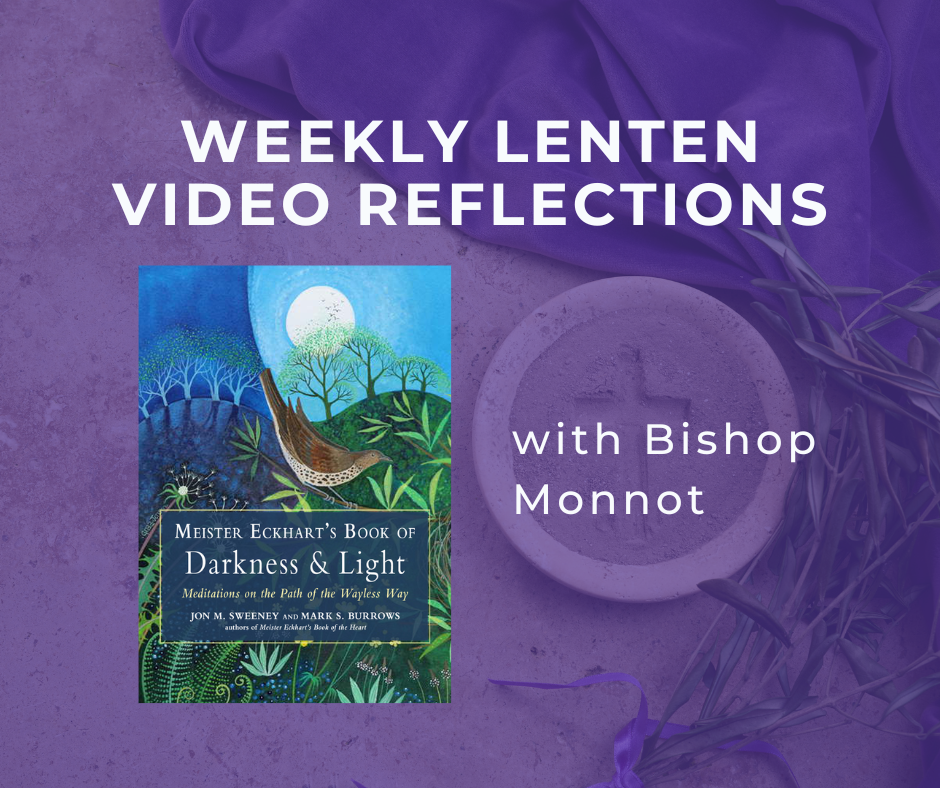
Meditations
Written by Sister Monica Clare, an Episcopal nun, author and unlikely TikTok star, our 2026 meditations offer an invitation to rediscover—or deepen—holy habits of prayer, worship and engagement with Scripture. These "holy habits" provide a path to a life that is given shape, meaning and direction by being rooted in a deeper relationship with God.
Lenten Resources

Celebrated the day before Ash Wednesday, Shrove Tuesday (also called “Pancake Tuesday” or “Pancake Day”) is the final day before the 40-day period of Lent begins. Its name comes from the Germanic-Old English word “shrive,” meaning absolve, and it is the last day of the liturgical season historically known as Shrovetide. Because it comes directly before Lent, a season of fasting and penitence, this was the day that Christians would go to be “shriven” by their confessor. Read more here
Offer “Shrove Tuesday Party Packs” for pick-up

Ashes may be imposed on the heads of participants in the Ash Wednesday service as a sign of mortality and penitence. The ashes are imposed with the words, “Remember that you are dust, and to dust you shall return” (BCP, p. 265). Ashes are typically imposed by inscribing a cross on the forehead. The imposition of ashes has been practiced on Ash Wednesday since the ninth century.
Hear from Bishop Monnot what today is all about, and join with as she invites us into a Holy Lent together.

Stations of the Cross images for use with the readings from The Way of the Cross in The Book of Occasional Services.
Print and use this Stations of the Cross booklet at home.
Stations of the Cross coloring posters, pages, and a devotional guide from Illustrated Ministry.
Way of the Cross with 8 stations based directly on events recorded in the Gospels, written by the Rev. Susanne Watson-Epting
Stations of the Cross that moves through the stations inspired by René Girard’s work on The Anthropology of the Cross and James Cone’s, The Cross and the Lynching Tree (adult), complied by Rev. Frank Logue.
The Way of the Cross for Pandemic Time - a complete service for use in hybrid, virtual, or in-person settings that envisions the way of the cross in our current realities.

“Living the Way of Love offers forty brief reflections about the seven Jesus-centered practices identified by Presiding Bishop Michael Curry in ‘The Way of Love’ initiative (from Church Publishing)
The 40 Days of Gratitude Lenten Journal is designed for at-home use for adults to deepen their spiritual practice of gratitude during Lent (from United Thank Offering)

Lent Madness 2025: learn about the men and women comprising the Church’s Calendar of Saints in this bracket tournament
Will You? A Lenten Study of Baptismal Promises: this five-week Lenten small group study offers daily reflections, examples of evangelism in action, and an invitation to think in new ways about the promises we make to God, each other, and ourselves in baptism (from Forward Movement, in collaboration with Episcopal Evangelism Society)
Have a Beautiful, Terrible Lent: resources to reflect and pray together from Kate Bowler
Lent in a Bag ideas
An Illustrated Lent for Families: God is Still With Us from Illustrated Ministries
Life Transformed: The Way of Love in Lent resources and Bulletin Inserts
Preparing to Become the Beloved Community: this Lent curriculum can help your small group or congregation to engage in racial reconciliation and reflect on Jesus’ coming among us.
Holy Week & Easter Resources:
Sermons for Holy Week and Easter
Three Days from Home booklet to use for Maundy Thursday, Good Friday, and Easter Vigil
Holy Week at Home: Family Practices for the Triduum
Holy Week in a box
Holy Week at home for birth-K and grades 1-5
Begin a Lego journey through Holy Week

The Liturgy for Palm Sunday carries us into Holy Week. The service begins with Jesus’ triumphal entry into Jerusalem. The mood shifts with the reading of the passion, and we begin the journey through the events that culminate in Jesus’ crucifixion and death.
Palm crosses video how-to
Palm frond coloring page
Palm Sunday Prayerpoem from enfleshed

Tenebrae (the Latin word for “darkness” or “shadows”) provides an extended meditation upon, and a prelude to, the events in our Lord’s life between the Last Supper and the Resurrection. The service is structured around chanted psalms, readings, and responsories. The distinctive ceremony of Tenebrae includes use of lighted candles. One candle is extinguished as each of the appointed psalms is completed. The last candle, symbolic of Christ, is left lighted at the end of the final psalm. But it is carried away to be hidden, which signifies the apparent victory of the forces of evil. A sudden loud noise is made at the end of the service, symbolizing the earthquake at Christ's death. The lighted candle is then restored to its place, suggesting Christ's eventual triumph.
Tenebrae Service for download

The liturgy for Maundy Thursday is part of the Triduum, or three holy days before Easter. The Liturgy for Maundy Thursday is rich and focuses on two major themes. Coming from the Latin for “mandate” which means to command, “maundy” refers to the commandment Jesus gave his disciples to love each other. The second theme is the last supper Jesus shared with his disciples, which shaped the sacrament of the Eucharist for followers after his death. Following the service, the altar (or your prayer area) is stripped and all decorative furnishings are removed.
Maundy Thursday service with families and individuals at their individual homes
Agape Prayers for at home
Maundy Thursday at home: Stripping The Table

We mark Christ’s crucifixion with the Good Friday Liturgy, which is made up of readings, hymns, prayers, and silence. The Liturgy of the Word concludes with the dramatic reading of the Passion according to John. The Solemn Collects, which follow, are the fullest form of the Church’s public intercessory prayer and present our prayers before God for the entire world for which Christ died.
Good Friday Contemplative Service of Scripture and Song from enfleshed

Since the early days of the church, Easter Eve was a time set aside for baptisms. They were elaborate, dramatic services, symbolizing a new beginning. A study in contrasts, the service begins in the darkness. A fire is kindled and the Paschal Candle is lit. Other candles are lit, bringing in new light. An ancient hymn, the Exsultet is sung. Several Old Testament lessons are read and songs are sung. The Renewal of Baptismal Vows follows, and at the conclusion, the celebrant calls out “Alleluia. Christ is risen.” Then the lights come on and the bells are rung with great fanfare.

Holy Week concludes with the greatest feast of the Christian year, the celebration of Jesus’ resurrection.
Easter sunrise breakfast at home
Art Project: Making Easter Flags
Crafts: Resurrection Garden & Easter Wheat
Recipe: Moravian Love Feast Buns