February 2026 e:News: From Bishop Monnot
As you know, last month I traveled to Minneapolis, where I joined several diocesan clergy as we gathered with faith leaders from all over the country in prayer, witness, and action to support our Minnesota siblings who were living under all the daily difficulties brought about by the surge in ICE activity there.
On the morning of the march, we began our day with an interfaith prayer service at Temple Israel in Minneapolis. The rabbi who welcomed us into that sacred space reminded us that one of the core principles that unites us is the belief in the inherent dignity of every human being. This belief, of course, is enshrined in our own baptismal covenant: “Will you strive for justice and peace, and respect the dignity of every human being? I will, with God’s help.” God wants us Christians to see every person through eyes that have been opened by Jesus and are seeing with the light of Christ.
Our time in Minneapolis also included conversations and discussions with residents of Minneapolis who shared their experiences over the previous weeks. What we learned was that the activity of ICE was affecting everyone, without exception. We heard stories of residents, including white American citizens being harassed, followed, and asked for identification, all with the threat of violence and detention at the whim of the ICE officer.
One story came from Bishop Craig Loya, the Episcopal bishop of Minnesota. He shared that the senior warden of the cathedral, who is white and an American citizen, was stuck in a traffic jam, unable to move her car. ICE agents removed her from her vehicle and detained her in the Whipple federal building for eight hours, just because she was unable to move her car when they told her to. This is one small example, and this is the kind of story that we heard repeatedly. So I ask: if that’s the way they treat a white American citizen, how are they treating people of color or people who don’t have legal status in this country? Where is the dignity of every human being?
But here’s the thing: the people of Minneapolis are coming together to keep each other safe. I heard stories of residents who organize shifts to patrol their neighborhoods, ready with whistles and connected to rapid-response groups, in order to alert people when ICE agents are in the area so they won’t go outside. When these alerts happen—and we heard one outside a church we were visiting—people at risk stay inside, and people with more privilege gather as observers and to challenge ICE agents to abide by the law in their activities.
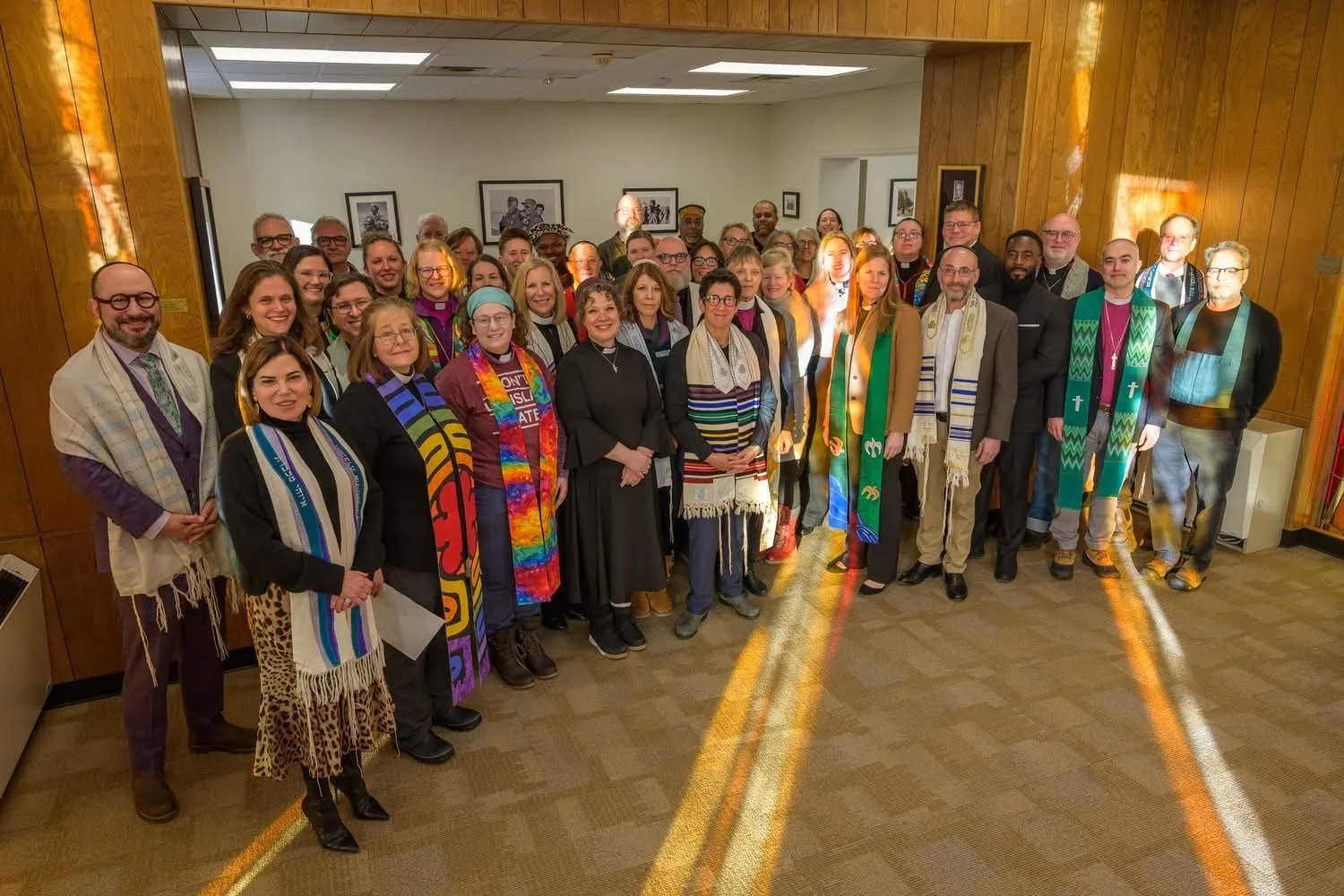
Interfaith clergy gathered before the prayer service
I visited an Episcopal church in a Minneapolis suburb that is home to a ministry called Casa Maria. In ordinary times, Casa Maria was a thriving ministry, gathering donations of food and clothing and providing a safe place for their neighbors to gather and receive what they need and learn about options for health care, employment, and housing. However, since the beginning of Operation Metro Surge, Casa Maria has seen a dramatic decline in the number of people who come to their doors.
“The Kingdom of God is bigger and deeper than partisan politics. In the Kingdom of God, no one is left out”
The reason for this is that many people are afraid to leave their homes for fear of encountering ICE agents, who are known to detain anyone who looks black or brown or who speaks English with an accent, regardless of their immigration status. Casa Maria has responded by changing their operations. They now offer deliveries of food and basic supplies to people who can’t leave their homes. The requests for deliveries have multiplied: one week saw a ten-fold increase.
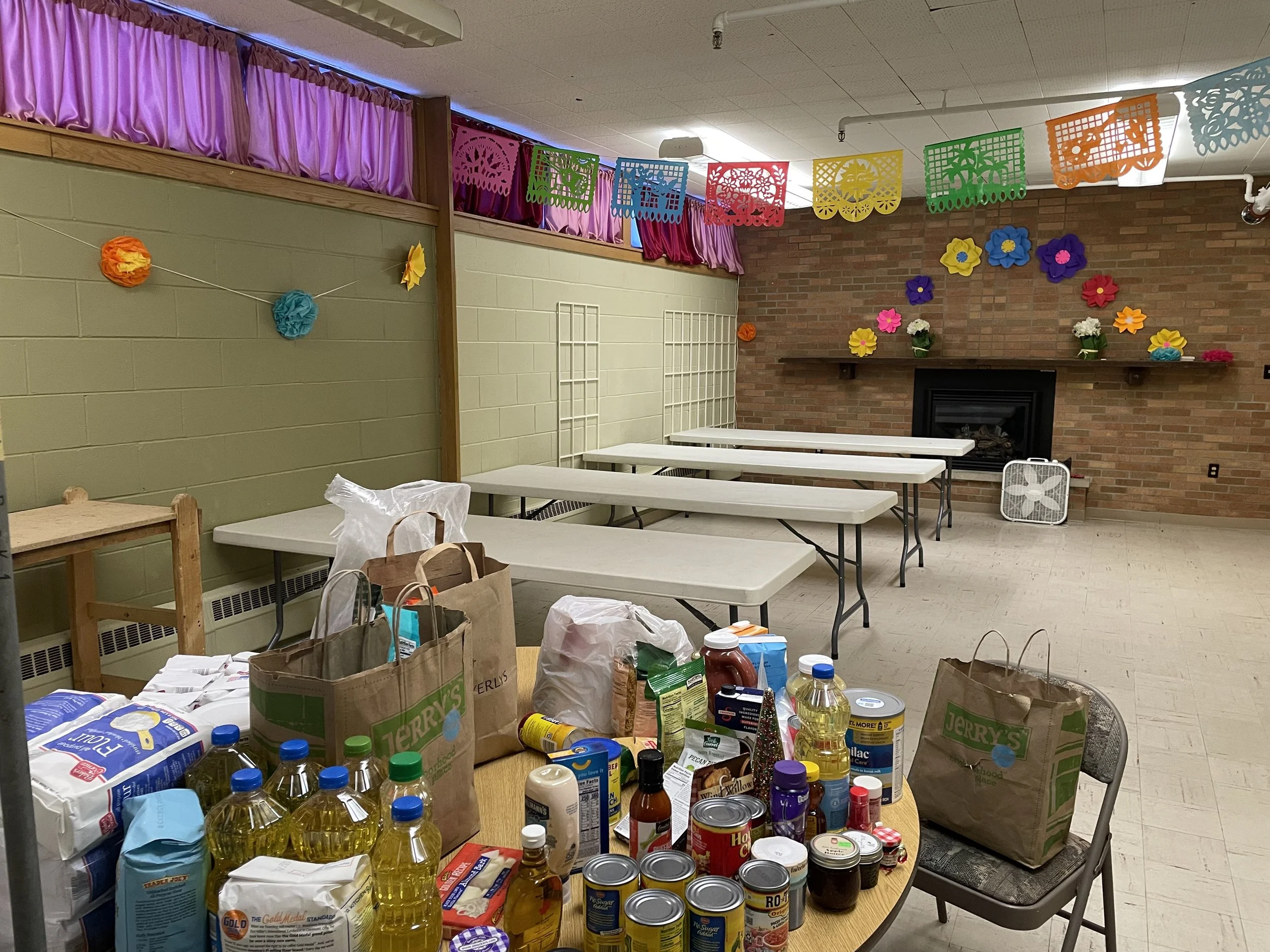
Tables and groceries at Casa Maria ready to be assembled and distributed.
This is where the Kingdom of God comes in. People who have never been involved in this kind of volunteer service before are stepping up to love their neighbors. Some offer to take grocery lists, do the shopping, pay for the groceries themselves, and deliver them. Others drive deliveries that have been assembled by volunteers at Casa Maria. Still others are contacting local grocery stores and other possible sources for food donations, picking up those donations, and sorting them at Casa Maria. People are helping out in the ways that they can. This is a microcosm of the Kingdom of God, everyone offering to share the gifts that God has given them so that everyone might have enough and that every person might be treated with dignity.
The Kingdom of God is bigger and deeper than partisan politics. In the Kingdom of God, no one is left out. Remember, among God’s beloved children are those who have created and perpetuated the occupation in Minneapolis. Among God’s beloved children are those who are brutalizing and mocking their victims. God despairs of the spiritual, emotional, and mental damage that is taking place within the hearts of those who are oppressing their neighbors. God’s love for them is deeper than anything we can understand.
Jesus prayed for those who were persecuting him. He loved his enemies, and he loved his neighbors, and he calls us to join him. This call is not easy, and it must not be taken lightly, but together in Christ, if we are on God’s side, we know that God’s love working in us is unstoppable.
I encourage you to spend time this Lent in prayer, listening to God and discerning how God might be calling you to lean in to loving your neighbors. Join one of our Immigration Roundtables on Zoom on Tuesday February 24 at 12:30pm or 6:00pm - register here to receive the Zoom link. Think about ways that you might be called to strengthen your church and neighborhood networks and support the people who are frightened and suffering. Consider donating financially to Casa Maria or to the Episcopal Diocese of Minnesota’s Migrant Support Fund HERE. Above all, remember that you are God’s beloved child, and there is nothing you can do, or fail to do, that would ever make God love you any more, and there is nothing you can do, or fail to do, that would ever make God love you any less.
Yours in the abundant life of Christ,
+Betsey
The Rt. Rev. Betsey Monnot, Bishop of the Episcopal Diocese of Iowa